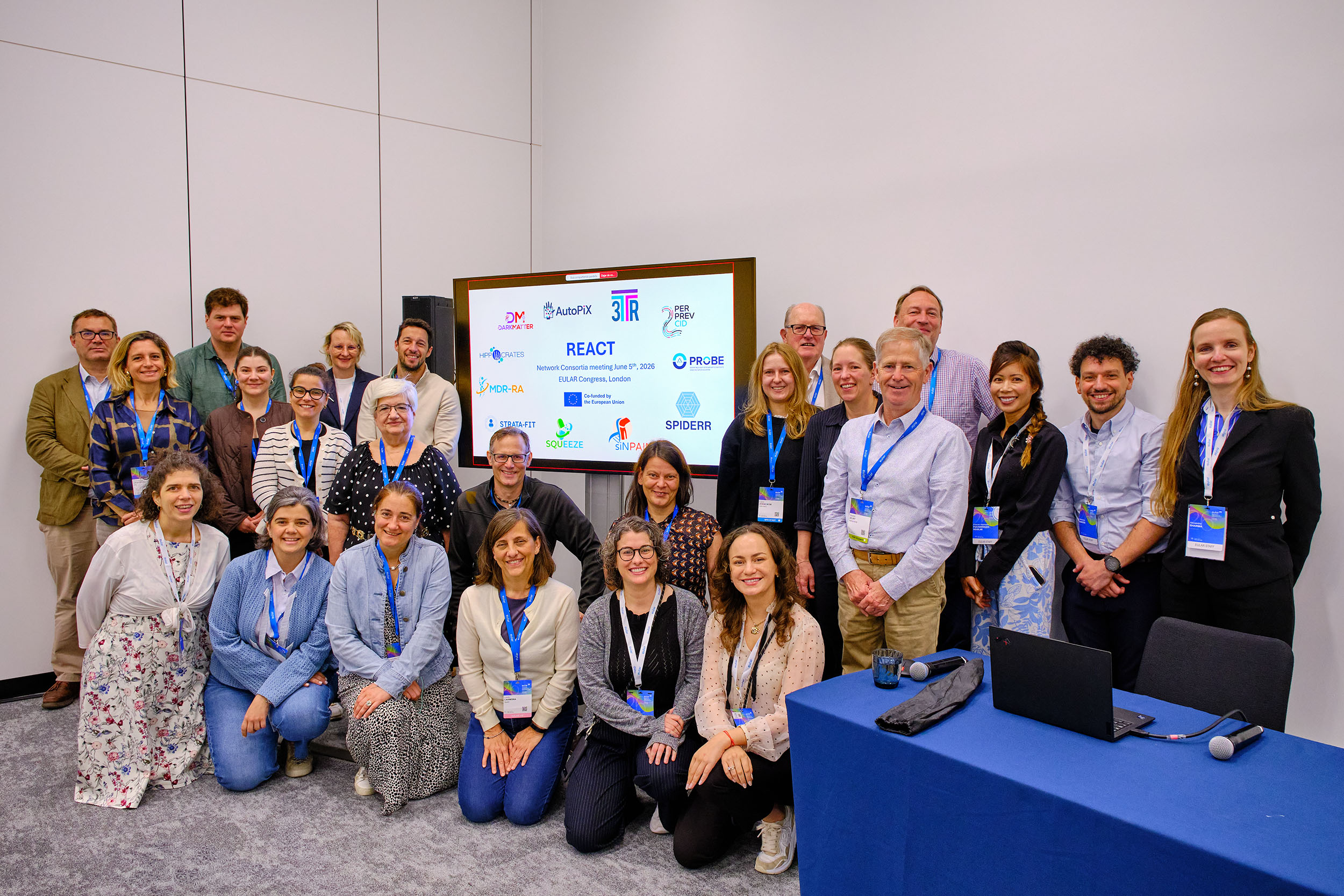
Every year, the EULAR Congress brings together thousands of people – including patients, healthcare professionals, researchers, policymakers, patient organisations, industry representatives, and representatives of EU-funded research projects – united by a common goal: improving the lives of people living with rheumatic and musculoskeletal diseases.
With more than 10,000 participants from across the world, EULAR 2026 in London once again demonstrated the strength of the global rheumatology community.
For the SQUEEZE consortium, the congress offered valuable opportunities not only to share research findings, but also to exchange experiences, learn from others, discuss how research can ultimately create meaningful impact in clinical practice – and above all: to re-connect with the SQUEEZE family!
Putting stakeholders at the centre
One of SQUEEZE’s first contributions focused on stakeholder involvement in complex multinational research projects.
Drawing by now on years of experience, the team shared how patients, clinicians, researchers, and other stakeholders have been involved throughout the project lifecycle. Beyond presenting a structured approach to stakeholder engagement, the discussion highlighted an important lesson: meaningful involvement requires continuous dialogue, clear roles, and regular evaluation.
From research findings to everyday practice
A recurring theme throughout the congress was implementation – the challenge of ensuring that promising research findings actually reach patients and healthcare systems.
During the session “Please Mind the Gap: Approaches to Implementing Research into Rheumatology Practice”, SQUEEZE contributors explored different aspects of this challenge.
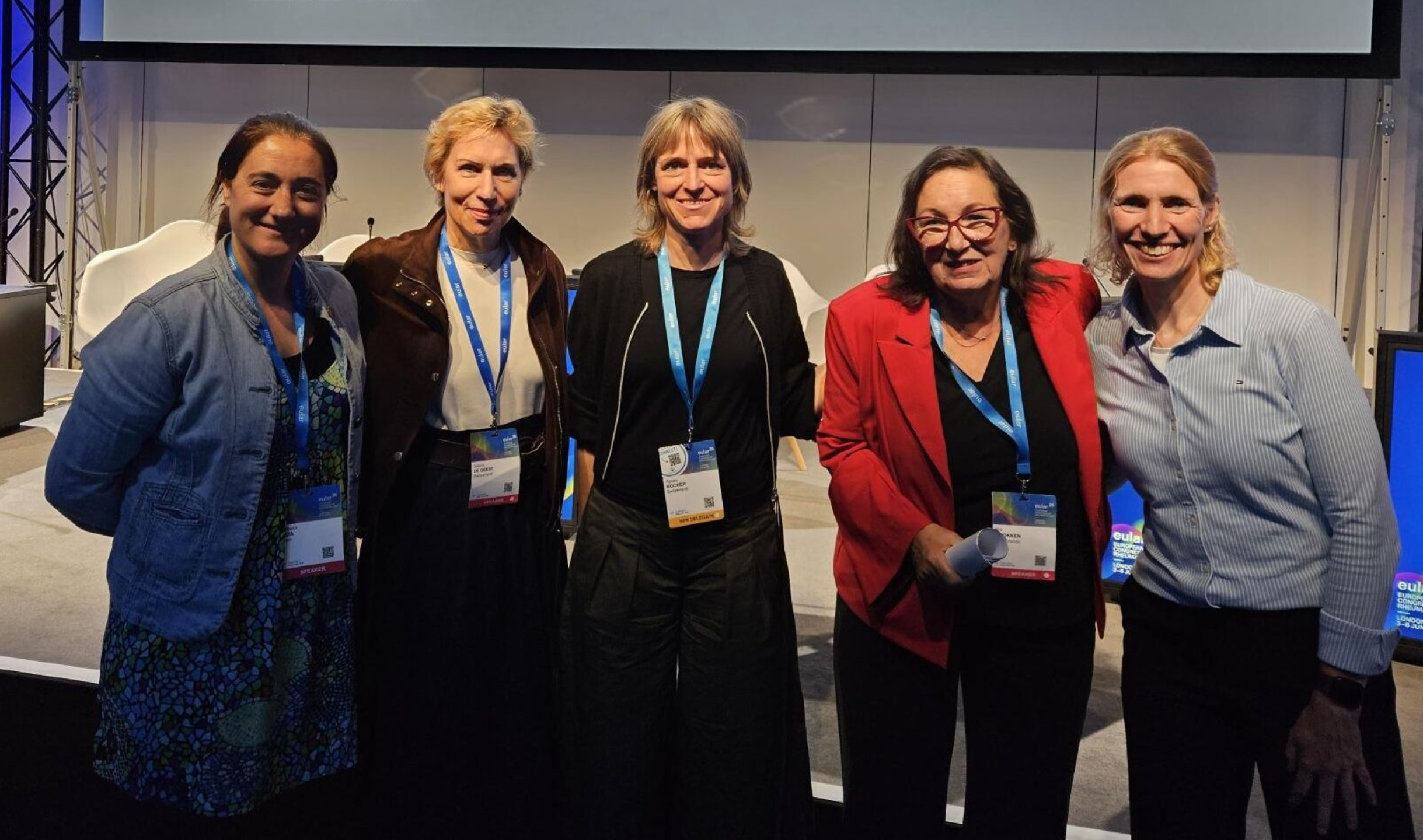
One of our Patient Research Partners, Ria Brokken, shared reflections on the role patients can play in implementation efforts, highlighting practical considerations such as accessible communication, early involvement, and creating environments where meaningful collaboration can flourish.
Agnes Kocher, from the University of Basel team, presented the development of the SQUEEZE eHealth-facilitated integrated care model, an implementation science-informed intervention designed to support adherence to disease-modifying antirheumatic drugs (DMARDs) and strengthen routine rheumatology care.
Together, these contributions reinforced a key message: generating evidence is only part of the journey. Turning evidence into improved patient outcomes requires thoughtful implementation, collaboration, and sustained engagement.
The value of meeting face-to-face
While scientific presentations are at the heart of every congress, much of the value of EULAR comes from the conversations happening between sessions, at project booths, during networking events, and across stakeholder groups.
Throughout the whole congress, the SQUEEZE team engaged with colleagues from other Horizon Europe and Innovative Health Initiative projects, patient organisations, healthcare professionals, and researchers from across Europe and beyond.
These interactions often sparked new ideas, potential future collaborations, and fresh perspectives on shared challenges. They also serve as a reminder that progress in healthcare rarely happens in isolation.