
A minimally invasive biopsy inside the joint is giving doctors new insight into rheumatoid arthritis — and bringing personalised treatment closer than ever.
For millions of people living with rheumatoid arthritis, daily life is shaped not only by pain and fatigue, but also by uncertainty. One of the most frustrating challenges patients face is not knowing which treatment will actually work for them.
A simple, minimally invasive procedure is now beginning to change that.
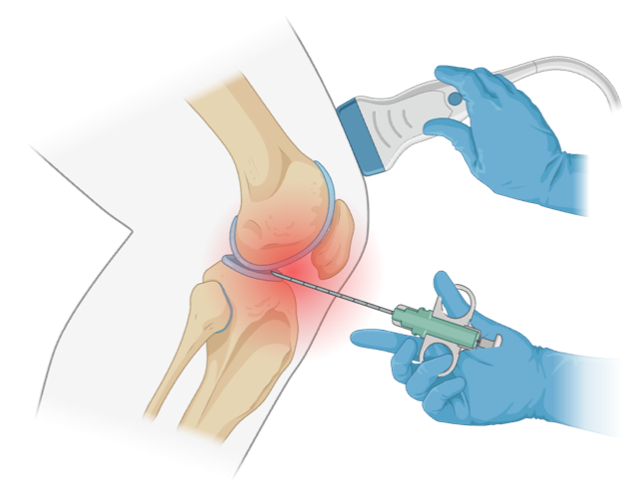
Known as a synovial biopsy, this technique allows doctors to look directly inside the joint — at the exact place where inflammation develops, and the disease takes hold. Already used in specialised centres across Europe, it is opening new possibilities for more effective understanding and treatment of rheumatoid arthritis.
The procedure involves taking very small samples from the synovial tissue, the inner lining of the joint. Using ultrasound guidance, doctors can precisely target the most inflamed area. It is performed under local anaesthetic, takes less than an hour, and requires no incisions or stitches. Patients can leave the clinic shortly afterwards and return to their normal daily activities the same day.
Although the idea of a biopsy may sound intimidating, patients who undergo the procedure often describe it as far simpler than they expected. Safety data is equally reassuring. Studies involving hundreds of procedures have reported no serious complications or infections, and mild, temporary discomfort remains rare.
And yet, what this small procedure can reveal is far from small.
A small procedure with big potential
For years, treatment decisions in rheumatoid arthritis have relied heavily on trial-and-error. Patients may go through multiple therapies before finding one that works, often losing valuable time while the disease continues to affect their quality of life.
By analysing tissue directly from the joint, synovial biopsy provides insights that cannot be obtained through blood tests or imaging alone. It allows doctors to better understand the unique biological profile of each patient’s disease and brings medicine closer to answering a crucial question: which treatment is most likely to work from the start?
The implications are significant. Fewer ineffective treatments, faster control of the disease, and a more predictable and reassuring journey for patients.
This is also the focus of the European research project SQUEEZE, which places synovial biopsy at its centre. By studying biomarkers found in joint tissue, researchers aim to match each patient with the treatment most suited to their condition, moving away from trial-and-error prescribing toward a more personalised approach to care.
For patients, this represents more than scientific progress. It offers the possibility of spending less time searching for the right treatment — and more time living with better control of their disease.
This article has kindly been provided by one of our patient research partners, Katy Antonopoulou, president of Sjögren Europe.
