
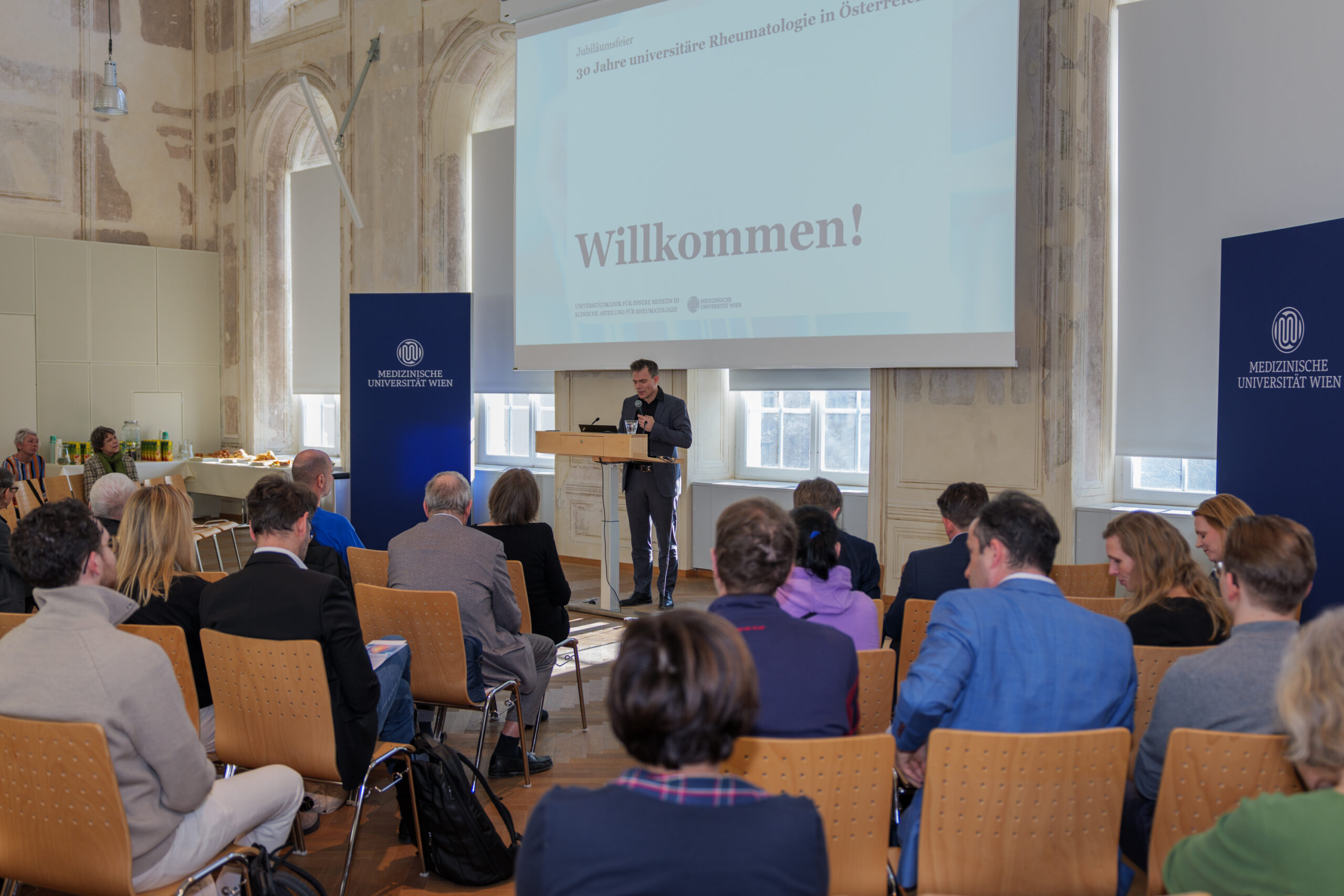
On 25 February 2026, the Division of Rheumatology at the Medical University of Vienna welcomed more than 120 guests to the historic Josephinum to celebrate a major milestone: 30 years of the Chair of Rheumatology in Austria.
Patients and their families, healthcare professionals, researchers, and members of the public gathered for an afternoon of lectures, demonstrations, discussions, and networking dedicated to the past, present, and future of rheumatology.
From the Early Days of Rheumatology to Future Innovations
The event opened with a welcome address by Michaela Fritz, Vice Rector for Research and Innovation at the Medical University of Vienna.
Guests were then taken on a journey through the history of rheumatology by Josef Smolen, Austria’s first Professor of Rheumatology and former Head of the Division of Rheumatology at MedUni Vienna. Reflecting on the remarkable progress of the field, he traced developments from early treatment approaches such as bee venom and gold therapy to today’s highly effective targeted treatments.
Building on this historical perspective, Daniel Aletaha, Head of the Division of Rheumatology, looked towards the future. His presentation highlighted emerging treatment approaches including CAR-T cell therapies, personalised medicine, and the growing role of artificial intelligence in medical imaging and patient care. Several of these innovative areas are also being explored within SQUEEZE and our sister project AutoPiX, coordinated also by the Division of Rheumatology at MedUni Vienna.
Making Rheumatology Tangible
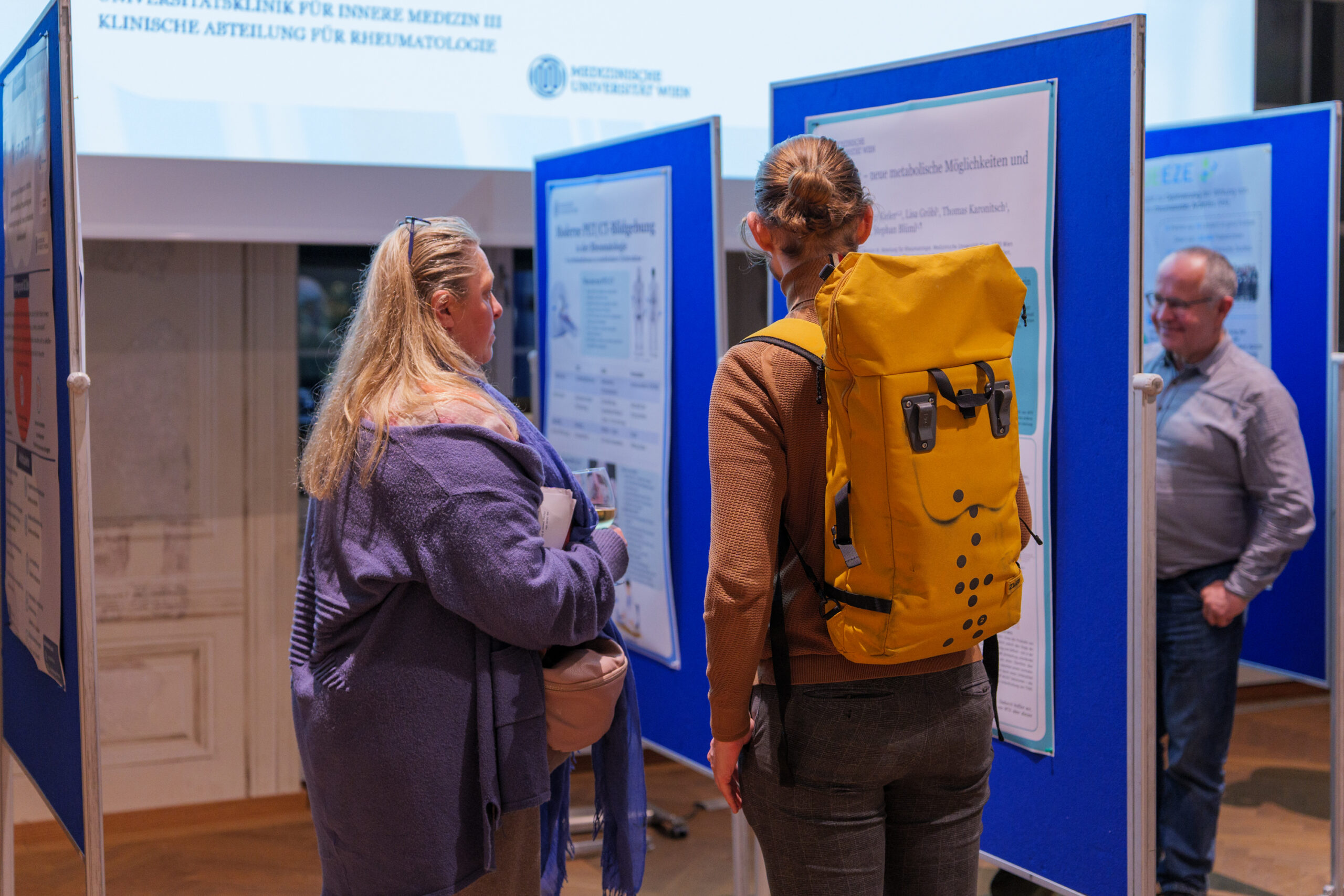
One of the highlights of the event was an interactive exhibition. Visitors had the opportunity to experience diagnostic and imaging technologies first-hand, including ultrasound, thermography, and capillaroscopy.
Researchers and clinicians demonstrated how thermographic imaging may help detect joint inflammation at an early stage, while capillaroscopy offered insights into the tiny blood vessels of the fingertips, which can support diagnosis and disease monitoring in rheumatic conditions.
Additional stations allowed visitors to participate in joint assessments and learn more about routine rheumatological examinations.
The Austrian Rheuma League (Österreichische RheumaLiga, ÖRL) also participated in the event, providing information and opportunities for exchange with patients and interested visitors. As an independent patient organisation, the ÖRL plays an important role in supporting people living with rheumatic diseases and raising awareness about their needs.
Patient Partnership
The event further highlighted the growing importance of patient research partnerships, where patients contribute directly to research projects as equal partners, as it is done in SQUEEZE. By combining scientific expertise with lived experience, these collaborations help ensure that research addresses the real needs and priorities of patients.
Discussing the Future of Rheumatology
The event concluded with a panel discussion on the future of rheumatology. Moderated by Daniel Aletaha, the panel brought together experts from academia, clinical practice, healthcare professions, patient advocacy, and healthcare policy. Discussions addressed future treatment developments, patient care, healthcare system challenges, and the role of innovation in improving outcomes for people living with rheumatic diseases.
The audience actively contributed questions and perspectives, creating a lively exchange between experts and attendees.
Thirty years after the establishment of the Chair of Rheumatology, the event demonstrated how far the field has progressed – and how much exciting innovation still lies ahead. Bringing together patients, researchers, healthcare professionals, and policymakers, the event reflected the collaborative spirit that continues to drive advances in rheumatology today – in the SQUEEZE project and beyond.
